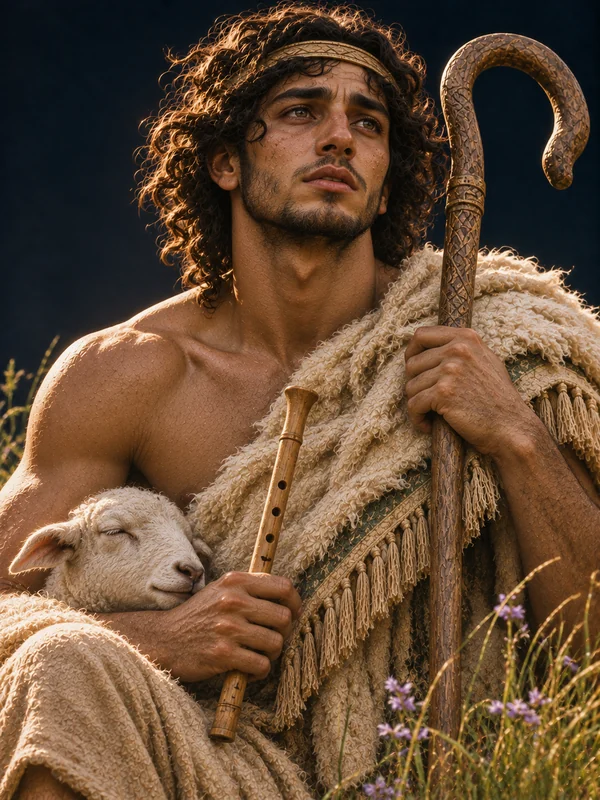
Dumuzi
The shepherd god
“My sister, the demons have come for me”
AT A GLANCE
- ANCIENT NAME
- Dumuzi (Sumerian), Tammuz (Akkadian and Hebrew)
- DOMAIN
- Shepherds, flocks, milk, the seasons
- PARENTS
- Enki and Duttur
- SYMBOLS
- Shepherd's crook, lamb, reed flute
- HOME
- Bad-tibira and the pastures
KEY MYTH
He won Inanna's hand over a farmer, but when she came back from the underworld she gave him to the demons in her place. Now he spends half of every year below.
TITLES AND EPITHETS
Tammuz
His Akkadian and later Hebrew name
The shepherd
Lord of the sheepfold and of milk
STORY
The shepherd and the farmer
When Inanna was ready to marry, her brother Utu urged her to take the shepherd Dumuzi. She wanted the farmer Enkimdu instead. Dumuzi boasted that his milk, cheese and wool were worth more than anything a farmer grows, and in the end he won her.
Dumuzi's dream
Dumuzi dreamed of his own death and fled from the demons sent to take him to the underworld. Utu turned him into a gazelle to help him escape, and his sister Geshtinanna would not betray his hiding place even under torture. But a friend gave him away, and the demons caught him at his sheepfold.
Half the year below
In Inanna's Descent, he is the one Inanna gives to the demons as her substitute, because he sat on his throne instead of mourning her. Later Inanna lets him return for half of each year, while his sister Geshtinanna takes his place below.
POWERS
Flocks and milk
He made the sheep and goats grow and their milk flow.
The sacred marriage
Kings took his role in the marriage with Inanna that brought the land its fertility.
The turning year
His going down and coming back followed the seasons of the herds and pastures.
WORSHIP
Laments
Every year people wept for him in songs of mourning. Many Sumerian laments for the lost shepherd survive.
The month of Tammuz
A summer month was named after him, and it is still called Tammuz in the Hebrew calendar and in Levantine Arabic.
LEGACY TODAY
Weeping for Tammuz
In the Bible, Ezekiel 8:14 sees women sitting at the gate of the Temple in Jerusalem, weeping for Tammuz.
The dying god
Scholars once made him the model of a “dying and rising god”. Today many think the old texts are more about loss than about resurrection.
DID YOU KNOW
The Sumerian King List names a Dumuzi the shepherd among the kings before the Flood.
His sister Geshtinanna's name means “lady of the vine”.
Utu turns him into a gazelle in one version and a snake in another.
FAMILY
- Parents
- Enki, Duttur, the ewe goddess
- Siblings
- Geshtinanna, lady of the vine
- Consorts and lovers
- Inanna
ECHOES IN OTHER WORLDS
Persephone (Greek)
Both spend part of every year in the underworld and return for the rest, a story long linked with the seasons. Dumuzi spends half the year below; Persephone a third in the Homeric Hymn, half in Ovid.