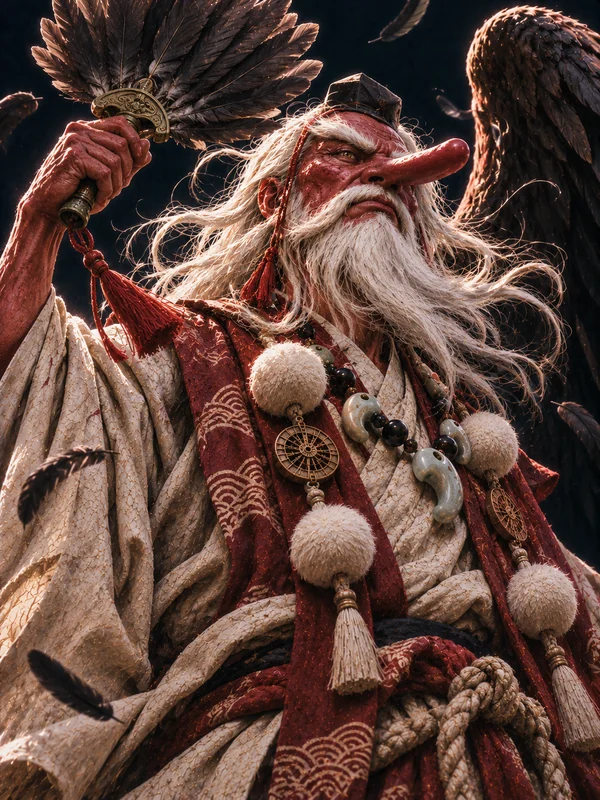
Tengu
Goblin of the mountains
“Proud monks become tengu”
AT A GLANCE
- JAPANESE
- 天狗 (Tengu)
- DOMAIN
- Mountains, forests, martial arts, pride
- PARENTS
- Folklore; the name comes from a Chinese “heavenly dog” meteor
- SYMBOLS
- Long nose, crow wings, feather fan, mountain-monk robes
- HOME
- Mountain peaks, Mount Kurama
KEY MYTH
The tengu began as a howling meteor in the Nihon Shoki and grew into a winged mountain goblin. Medieval tales made them tricksters who tempted proud monks and carried people off; legend says their king Sōjōbō taught the young warrior Minamoto no Yoshitsune to fight on Mount Kurama.
TITLES AND EPITHETS
Daitengu
“Great tengu”, the long-nosed lords of the mountains
Karasu-tengu
“Crow tengu”, the older, beaked kind
STORY
A dog from heaven
The name first appears in the Nihon Shoki for the year 637, when a great shooting star roared across the sky. A monk back from China declared it was no star but a tengu, a “heavenly dog”, the Chinese name for a howling meteor.
From crow to long nose
The early tengu of Japanese tales were bird-like goblins with beaks and wings. Over the Middle Ages they took on the familiar look: a red face, a very long nose, the robes of a mountain ascetic and a feather fan.
Enemies of the monks
Medieval Buddhist tales cast tengu as troublemakers who tempted monks, set fires in temples and led travellers astray. Monks who were too proud of their learning were said to be reborn as tengu.
Hidden by the gods
When people, especially children, vanished in the mountains, folk belief said tengu had carried them off. Some came back days later telling of flights over distant lands.
The king of Mount Kurama
Legend says Sōjōbō, the king of the tengu, lived on Mount Kurama near Kyoto and secretly taught swordsmanship to the boy Minamoto no Yoshitsune, who grew up to be one of Japan's most famous warriors.
POWERS
Flight
Wings carry them over the peaks, and they could take a person with them.
The feather fan
A wave of the fan raises winds strong enough to blow away trees.
Martial arts and magic
Masters of the sword, illusion and shapeshifting.
WORSHIP
Mount Takao, Tokyo
At Yakuōin temple on Mount Takao, great statues of a long-nosed and a crow tengu stand as guardians of the mountain.
Kurama-dera, Kyoto
The mountain temple remembers Sōjōbō, and tengu masks and figures are found all along its paths.
LEGACY TODAY
“Becoming a tengu”
In Japanese, tengu ni naru, “to become a tengu”, means to grow conceited.
Masks and festivals
Red long-nosed tengu masks lead festival processions all over Japan, often in the role of Sarutahiko.
DID YOU KNOW
In later centuries tengu changed from enemies of Buddhism into protectors of mountains and forests.
Later legends say the exiled emperor Sutoku became a great tengu out of rage.
The tengu's fan is called hauchiwa; in the oldest pictures it is a fan of hawk feathers.